Mastering Self-Advocacy in Job Interviews
How Channeling My Inner 'Thomas Shelby' Transformed an Interview into an Offer
October 17, 2023

Ever heard the tale of how Cillian Murphy landed the renowned role of Thomas Shelby in Peaky Blinders? It's quite an engaging narrative. Initially, Murphy wasn't even the frontrunner for the role — names like Jason Statham and Dwayne Johnson were hovering at the top of the list. Steven Knight, the mastermind behind the show, had reservations about casting Murphy because in real life he had a calm personality and look compared to the rugged, hardened character of gangster Thomas Shelby.
In an interview with The Guardian, Murphy unveiled that he wasn't ready to let the opportunity slip through his fingers. He proactively sent a succinct, impactful text to Knight: "Remember, I'm an actor." According to the Show's creator, this text was the tipping point that convinced him to cast Murphy. This short but powerful reminder underscored Murphy's ability to transcend his off-screen persona, embracing the gritty, complex nature of Thomas Shelby in a way audiences would later come to applaud.
This story isn't just a fascinating snippet from the world of showbiz; it's a powerful lesson for professionals in all fields, illustrating the importance of self-advocacy. As we delve into the art of advocating for oneself, particularly within the context of job interviews, Murphy's anecdote serves as a compelling starting point. In the competitive job market, where opportunities are often scarce and sought after by many, effectively communicating your value and potential is absolutely crucial. Let's explore how this inspired me to channel my inner Cillian Murphy and convincingly advocated for myself during an interview.
Channeling my inner Thomas Shelby
So, let me set the scene. I found myself in an interview for a Senior Frontend Engineer role, locked in a virtual dance with an accomplished Principal Engineer whose mission was to size me up for a major project lead position.
The conversation swayed this way and that, with the interviewer tossing questions about frontend libraries, react-table, data visualization tools — you name it. But here was the hiccup. While I was confident in my ability to crush this job, my experience was steeped in roles, where third-party libraries were often side-stepped for sleek, in-house solutions. A considerable chunk of my career was spent either crafting these solutions myself or being deeply involved in their creation.
Fast forward to the final leg of the interview — a live coding challenge, where I was tasked with implementing a virtualized table. As I signed off, I couldn't shake the feeling that the Principal Engineer was not impressed. He failed to see the distinct value I could bring to his organization. This was my cue.
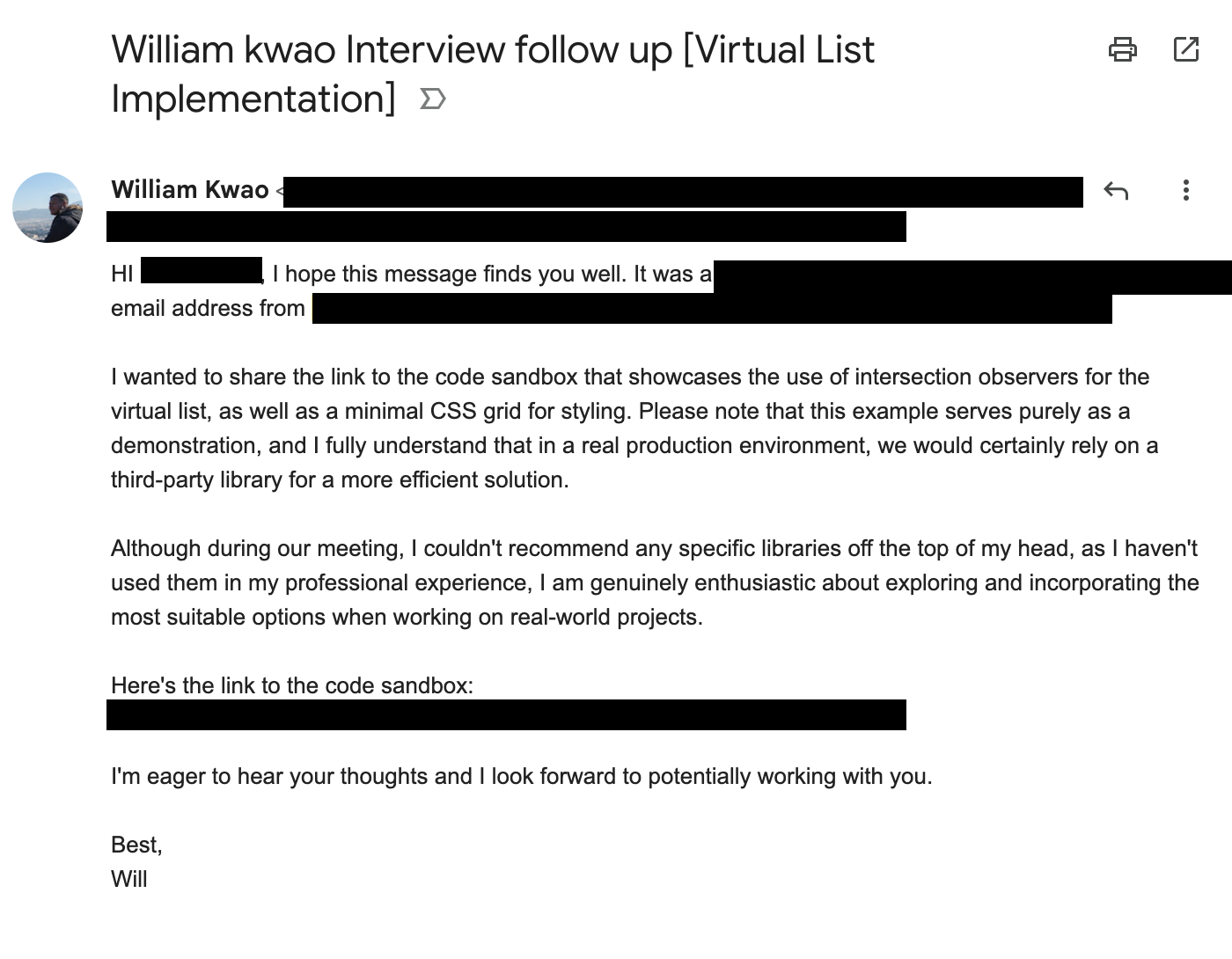
Taking a deep breath, I channeled my inner Thomas Shelby, acknowledging outright that the interview format had fallen short of letting me portray my full set of skills. I proposed sending him code within an hour, showcasing the construction of everything he had inquired about, without using third-party libraries. This way, he'd get front-row seats to the full spectrum of my skills.
With a hint of reluctance, he agreed.

One fervently productive hour later, I shot over my code. After a few hours, my phone buzzed with a call from the recruiter. The principal Engineer was impressed with my work and acknowledged the great value I could bring to his team. And just like that, the job offer landed in my lap.
Lessons Learned
In reflecting on both Cillian Murphy's audacious move and my own interview experience, several key lessons emerge that can guide us all in our professional journeys. Let's break them down:
1. Speak Up Confidently
If you don't advocate for yourself, it's unlikely anyone else will. When you know your worth and capabilities, don't be shy about expressing them. Speaking up doesn't mean being arrogant but confidently articulating what you bring to the table.
2. Seize the Initiative
Sometimes, the conventional process won't provide you the platform to fully shine. In such cases, take the initiative to create opportunities that allow you to demonstrate your value and skills comprehensively, just like sending that extra piece of code post-interview.
3. Remember, Perception Isn't Always Reality
People might have preconceived notions or misunderstandings about your skills and abilities, often based on limited information. It's your responsibility to correct and expand their perception, showcasing the depth and breadth of your talent.
4. Be Prepared to Demonstrate Your Skills
Words are powerful, but showing is often more convincing than telling. When needed, be prepared to demonstrate your skills in real-time or through additional examples that underline your expertise and readiness for the role.
5. Maintain Professionalism
Advocacy should always be conducted respectfully and professionally. Approach the conversation with humility and openness, avoiding a confrontational or entitled demeanor.
Final Thoughts
Closing this out, remember: effective self-advocacy is an indispensable tool in your professional toolkit. With the job market being as competitive as ever, standing out often requires more than meeting the job description. It demands a proactive approach to highlighting and demonstrating your unique value proposition.
So, arm yourself with these lessons and step into your next interview with a renewed sense of confidence and purpose. And who knows, with the right blend of skills, advocacy, and a bit of Shelby-esque audacity, your dream role might just be a confident reminder away — By Order of the Peaky Blinders 😃.
Eager to hear your thoughts and stories! Have you ever had to strongly advocate for yourself in professional settings? What lessons have you learned from these experiences? Share your "Thomas Shelby" moments and insights; let's keep the conversation going.